
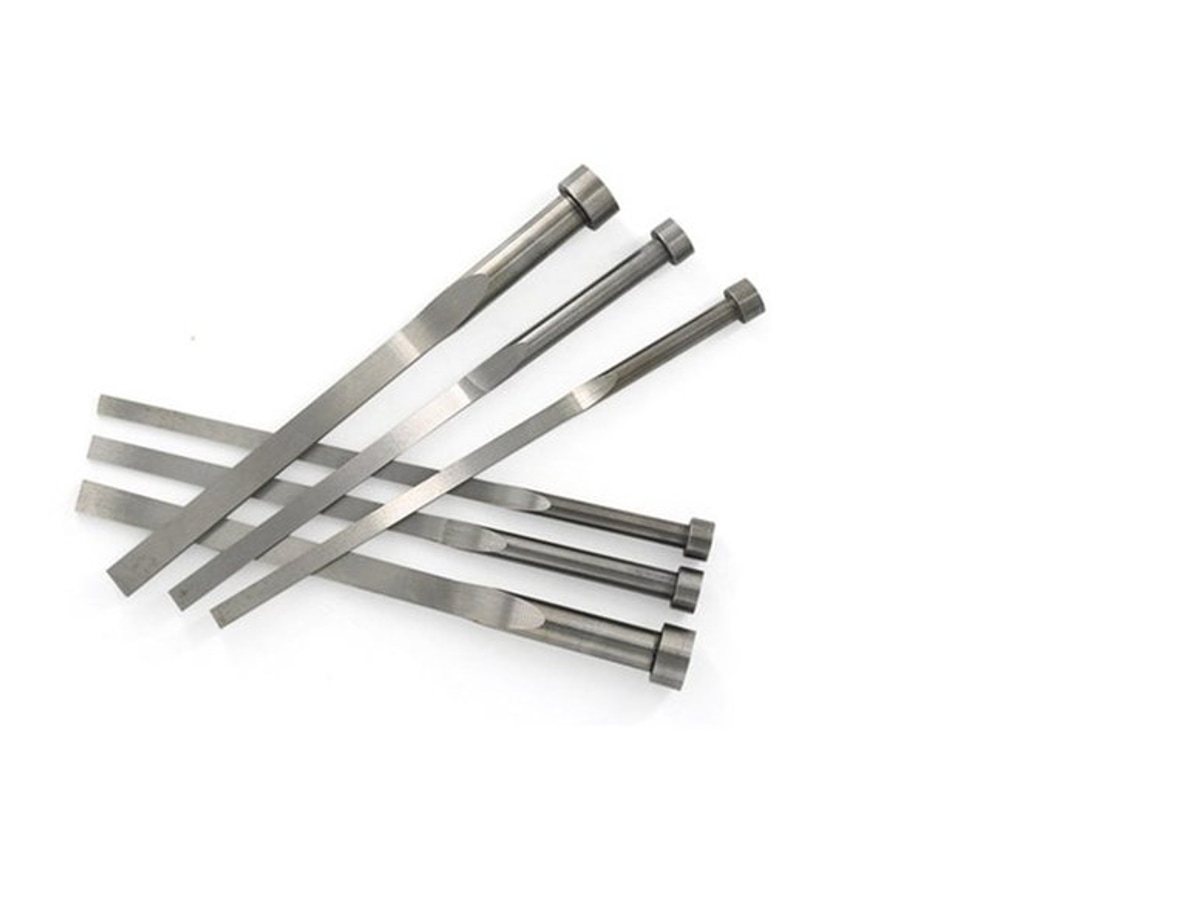

Designs and configurations
Blade Ejector Pins
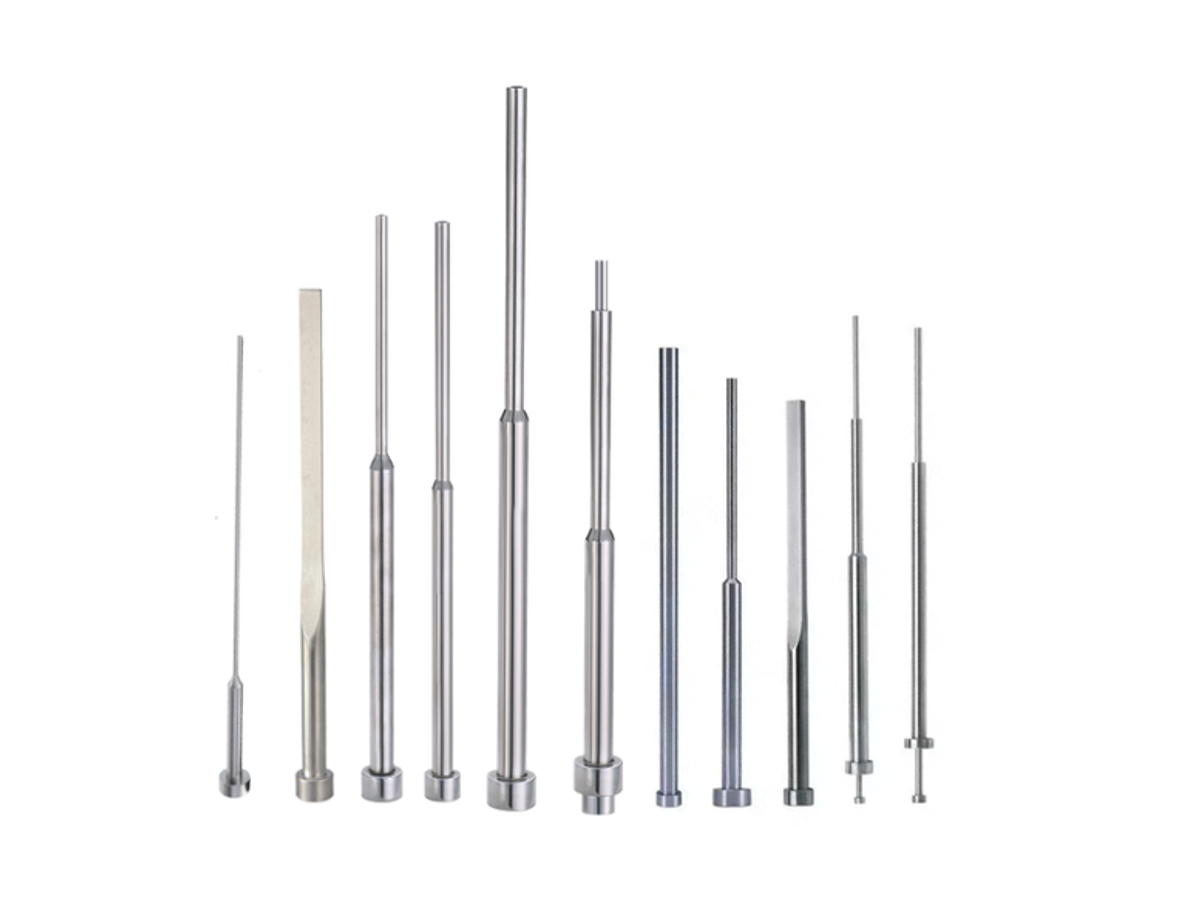
A thin rectangular working end reaches narrow ribs and restricted ejection areas. Blade orientation and the transition to the shank require close attention.
Designs and configurations ↓Material options
SKH51 · SKD61
The final grade and treatment are confirmed after reviewing your drawing and operating conditions.
Dimensions, tolerances, hardness, quantity and delivery are confirmed in the quotation. No fixed stock specification is implied.
Designs and configurations
Select function and geometry, then confirm material, fits and treatment. Options may be combined; dimensions follow the agreed drawing.
Standard solutions
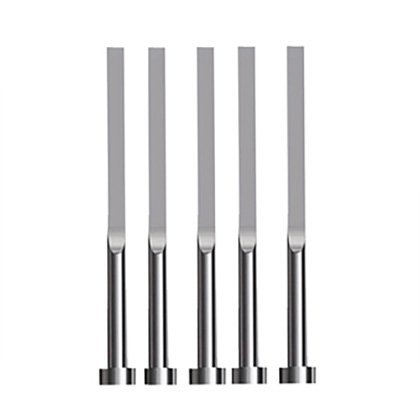
Universal flat blade structure for routine ejection in most injection molds.
Send inquiry now →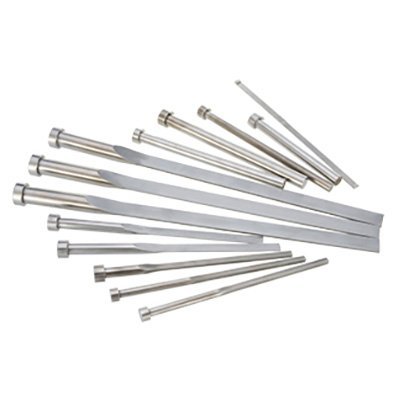
Custom solutions
Width, thickness and length customized to mold space and part geometry.
Send inquiry now →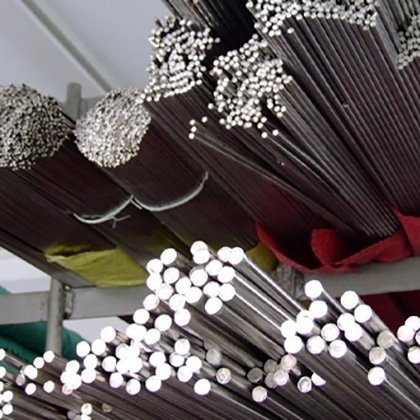
Material options
Select SKD61, stainless steel or tool steel for mold temperature and corrosion duty.
Send inquiry now →Industries and operating scenarios
The flat blade increases contact area to spread ejection force—suited to thin walls, narrow slots and complex areas where round pins cannot fit, helping reduce ejector marks, deformation and scratches; the non-round section can also resist rotation during ejection.
Send inquiry now →Typical industries
-
Thin-walled products -
Complex or confined spaces -
High aesthetic requirement -
Anti-rotation ejection
Materials and treatment options
Blade ejectors in narrow ribs need balanced strength and toughness; blade width, thickness and shank follow mold space and force.
Send inquiry now →Manufacturing overview; final process per agreed drawing.
Send inquiry now →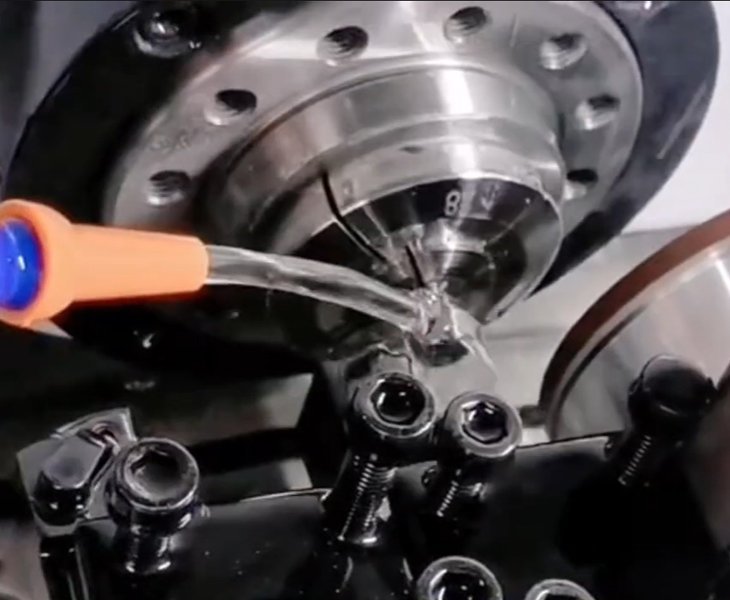
-
SKH51
An HSS option; balance wear, toughness and heat treatment, and verify standards before substitution.
-
SKD61
A hot-work steel option assessed for mold temperature and toughness; specify nitriding separately.
Surface treatments and finishes
Blade faces may be polished or nitrided; thin sections need straightness control after treatment.
Send inquiry now →Surface treatments and finishes
-
Grinding and polishing sliding surfaces
Specify roughness separately for sliding sections and part-contact tips while preserving head and orientation datums.
-
Nitriding option
Confirm suitability, treated areas and case depth for the chosen steel; recheck diameter and thin-section distortion.
Family-specific questions
Where are blade ejector pins used?
Narrow ribs, deep slots or tight spaces needing a thin ejection edge—confirm blade orientation and shank transition.
How to reduce blade pin breakage?
Control aspect ratio, grade and heat treat; ensure guidance and contact area—avoid over-treating thin sections.
What to supply for custom blade pins?
Drawing with blade width/thickness, shank, length, orientation and tolerances; resin and cycle count help material choice.
 Chat on WhatsApp